The Modalities
write something here
-
As you close your eyes and re-enter your dream images, we gently track your sensations, emotions, changing imagery, impulses, and nervous system responses. This process invites your unconscious to bring forth unresolved experiences, patterns, emotions, and thoughts to be digested in a more spacious and creative way.
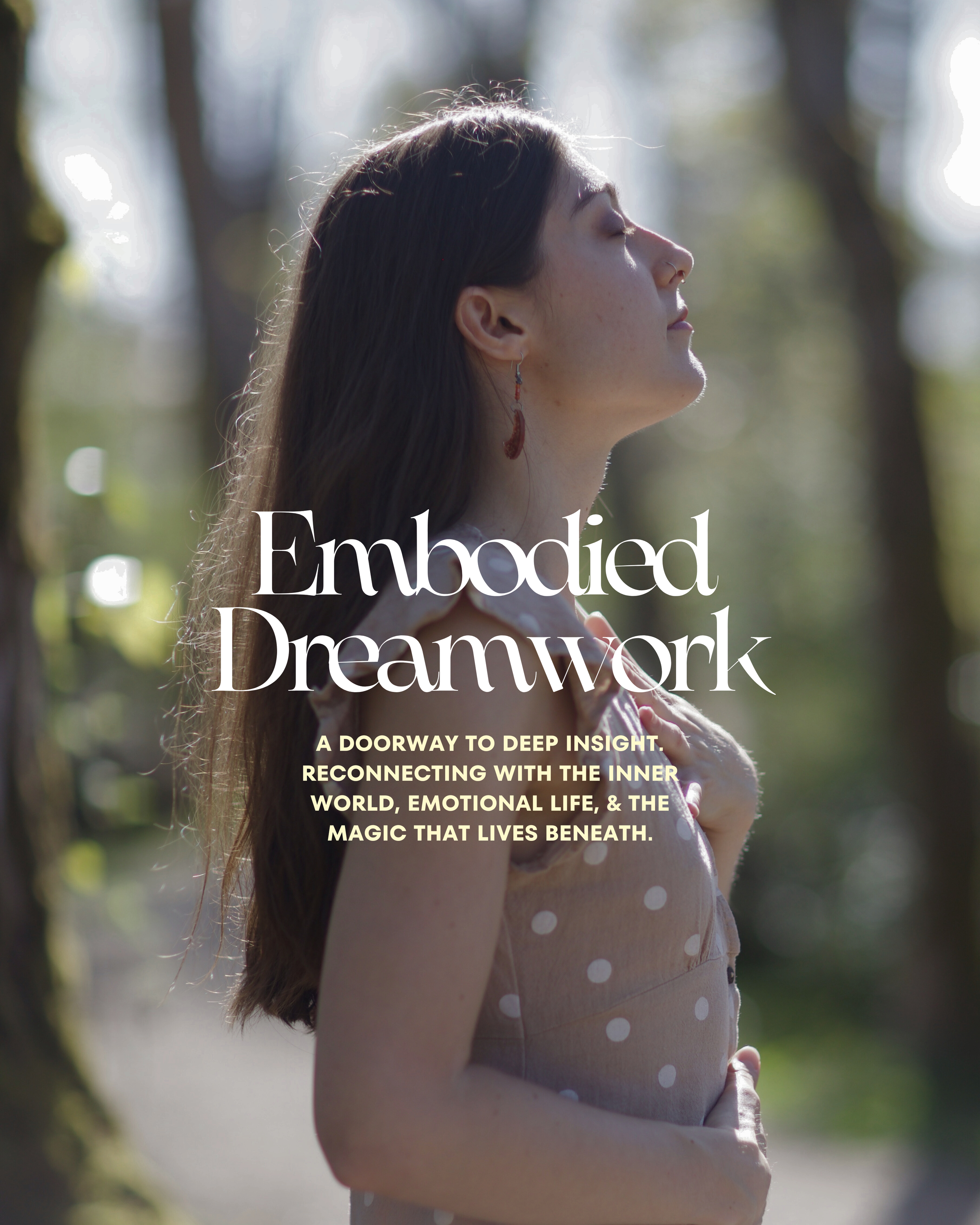
Dreamwork opens a doorway to deep insight - reconnecting clients with their inner world, emotional life, and the magic that lives beneath conscious awareness.
In dreamwork, we approach dreams not as puzzles to be solved, but as living experiences that can unfold again in the safety of the present moment. Rather than interpreting the dream from the outside, we allow its images, sensations, and emotions to reveal themselves from within.
As you revisit the dream, you may notice subtle shifts in your body — a tightening in the chest, a sense of warmth, a change in breath, or an impulse to move. These responses are gently followed with curiosity and care, allowing the body and nervous system to participate in the exploration.
Often, dream figures, landscapes, or symbols carry emotional meaning that words alone cannot fully capture. By slowing down and sensing into these experiences, the dream may begin to deepen and evolve in unexpected ways. Images may shift, new perspectives can emerge, and previously hidden feelings may find space to be acknowledged.
This process allows the unconscious to communicate in its own language — through imagery, sensation, and felt experience.
Over time, embodied dreamwork can help reconnect you with deeper layers of intuition, creativity, and self-understanding. Many people discover that their dreams carry a quiet wisdom, offering guidance, integration, and a renewed sense of connection to their inner life.
-
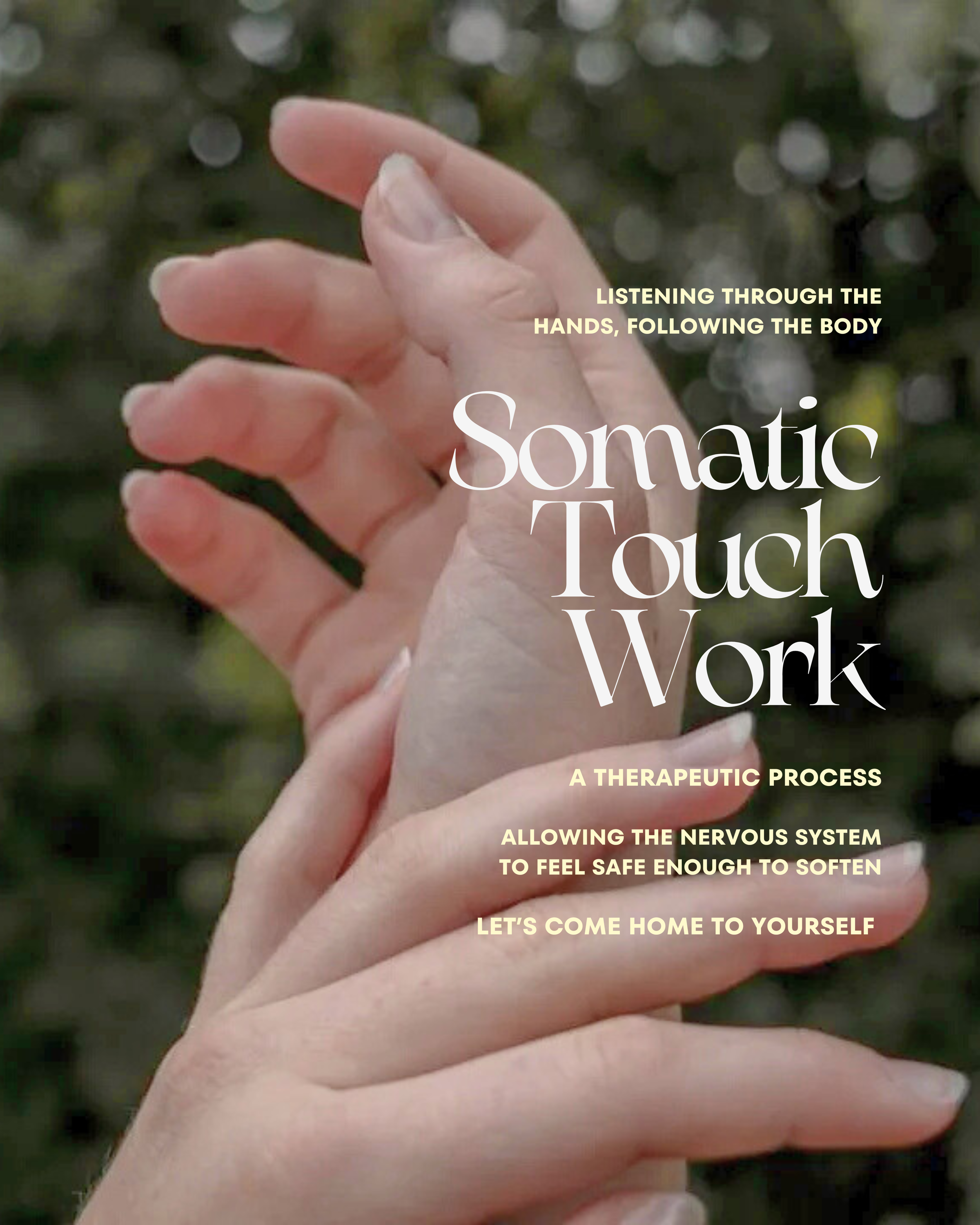
Somatic touch work is a way of listening with the hands.
It isn’t about fixing or forcing the body to change. It’s about meeting the body where it is at — gently, respectfully — and allowing it to reveal the stories it has been holding, often for years or decades.
In somatic touch work, the body is understood not as a machine to be adjusted, but as a living history of experience. Every contraction, every guarded shoulder, every braced jaw may have once been a brilliant act of protection. I will approach these places with deep attunement, curiosity, and consent — never trying to override the body’s intelligence, but to collaborate with it.
The touch itself is intentional. Sometimes it’s as subtle as resting a hand on the back or cradling the head. The pace is unhurried, allowing the nervous system to feel safe enough to soften and express what lives underneath i.e. stuck protective responses, unhealed wounding, and emotional longings. Safety is everything. When the nervous system senses that it is not being pushed, it may begin to unwind — breath deepens, warmth spreads, and trembling or tears may arise. These are not signs of something “going wrong.” They are signs of the body metabolizing what it once had to freeze, brace against, or carry alone.
My training in Somatic Experiencing, developed by Peter A. Levine informs my touch-work practice. This modality honors the body’s innate capacity to regulate and heal when given the right conditions. This approach emphasizes tracking sensation, supporting nervous system regulation, and allowing small, manageable shifts rather than dramatic catharsis.
At its most soulful, somatic touch work feels like being accompanied — not analyzed, not corrected — but accompanied. In sessions, I am listening not just with my hands, but with my whole presence. There is an ongoing, often quiet dialogue: Is this pressure okay? What are you noticing? Can we stay with that sensation just a little longer?
It can feel like coming home to yourself.
Sometimes what emerges is relief — a long exhale that feels like it has been waiting for years. Sometimes it is grief, or anger, or tenderness. Often it is simply a deep remembering that the body is not the enemy, and that it has been trying, all along, to keep you safe.
Somatic touch work is less about doing and more about allowing. Allowing sensation. Allowing emotion. Allowing the nervous system to rediscover rhythm. And in that allowing, something profound can happen: the body realizes it no longer has to hold everything alone.
-
When pain, trauma, or exclusion goes unacknowledged in a family system, it often seeks expression through later generations, showing up as repeated patterns, emotional struggles, or relational difficulties.
The system seeks balance through repetition until the issues have been acknowledged with respect and care. When what and who has been forgotten or purposely cast aside is finally acknowledged, the family field can reorganize and restore connection, dignity, and a deeper sense of belonging within both the family system and self.
In family constellations work, we begin to gently explore these unseen dynamics and loyalties that may be operating beneath the surface of our lives. Often, individuals find themselves carrying emotions, burdens, or life patterns that do not fully belong to them, yet feel deeply intertwined with their sense of identity.
Through the constellation process, these hidden relationships within the family field can begin to reveal themselves. Whether working with representatives, visualization, or embodied sensing, the focus is on allowing the deeper intelligence of the family system to show what has been held in the background.
As these dynamics come into view, there can be an opportunity to acknowledge those who came before us — including those who were forgotten, excluded, or whose suffering remained unseen. This recognition often brings a sense of relief and re-ordering within the system.
Rather than blaming or revisiting the past with judgment, the work invites a movement toward understanding and respect for the roles each person held within the family story.
Over time, this process can allow individuals to release unconscious entanglements and reclaim a more grounded place within their lineage. Many people experience a renewed sense of clarity, connection, and belonging — both within themselves and within the larger story of their family.